
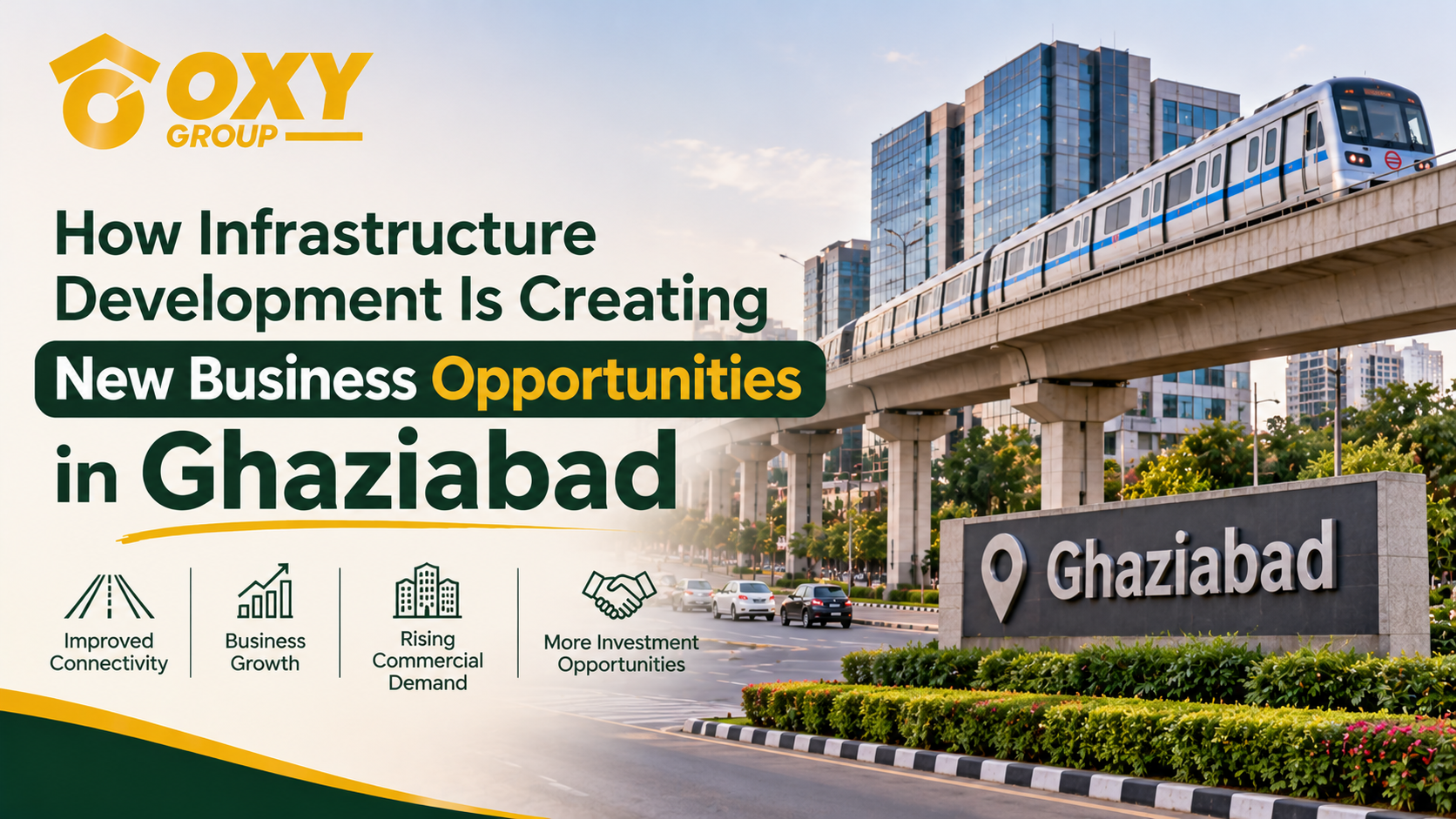
Ghaziabad has been a major contributor to the growth story of Delhi-NCR over time. Once a primarily residential destination, the city is now attracting interest from businesses, retailers, property investors and entrepreneurs. Infrastructure development is one of the major reasons behind this shift.
“Ghaziabad is becoming more accessible with improved road connectivity and metro access. Ghaziabad has been a key player in the growth story of Delhi-NCR over the years. Once a predominantly residential area, the city is now attracting interest from businesses, retailers, property investors and entrepreneurs. One of the main reasons for this shift is the development of infrastructure.
Let’s see how the infrastructure development is affecting the business opportunities in Ghaziabad and what it means for the city’s commercial real estate market.
1. Better Road Connectivity Is Supporting Business Growth
Connectivity plays a major role in deciding where a business should operate. Customers prefer locations that are easy to reach with vehicle convenience and also metro facilities. People prioritise locations more, while businesses need smooth transportation for employees, suppliers, and daily operations.
Ghaziabad benefits from important road networks like the NH-9 highway and the Delhi-Meerut Expreeways, which enhances connectivity with Delhi, Noida, Meerut and other parts of NCR.
These improved connections can make commercial locations more attractive for retail outlets, offices, showrooms, restaurants, and service-based businesses.
For example, a retail store located near a well-connected road may find it easier to attract customers from neighbouring residential areas. Similarly, businesses that depend on regular transportation can benefit from better access to major routes.
2. Metro Connectivity Is Making Commercial Locations More Accessible
The metro connectivity has transformed the way people commute across Delhi-NCR. A nearby metro station can help make a commercial location more convenient for employees and customers.
The Delhi Metro’s Red Line connects important parts of Ghaziabad, including areas around Vaishali, Kaushambi, and Mohan Nagar. This connectivity supports easier movement between residential, commercial, and employment hubs.
Accessible locations can help businesses improve customer convenience and employee commuting options.
Good public transport access could be useful for retail shops, cafes, clinics, coaching centres and other customer-facing businesses.
3. Growing Residential Areas Are Creating New Customer Demand
Infrastructure development is useful not only for commercial spaces but for residential ones too. This residential growth leads to a demand for basic services and retail businesses.
As residential areas grow, there is a demand for food shops, chemist shops, restaurants, salons, gyms, clinics and many more essential services.
It also becomes easier for business enterprises to settle near the consumers.
Residential and connectivity developments are happening in Raj Nagar Extension and many other parts of Ghaziabad. With that, there will be a greater demand for organised retail and commercial services.
For an investor, knowing this correlation is useful in choosing the right location.
4. High Street Commercial Spaces Are Becoming Relevant
Convenient shopping destinations are gaining importance as consumer preferences change. People often prefer shopping areas that offer easy access to several stores, restaurants and daily services.
This has sparked renewed interest in high street retail.
Unlike traditional enclosed shopping centres, high street developments generally have direct access from the street, visible shopfronts and the opportunity for individual businesses to establish their presence.
Such spaces can serve adjoining residential communities and passing customers in growing localities of Ghaziabad.
But the success of a commercial property is determined by location, visibility, accessibility, the population in the area, parking and what businesses are nearby.
5. Improved Infrastructure Can Attract More Business Investment
When a business chooses a location, it usually looks beyond the property itself. They look at transportation, customer access, nearby job centres, utilities and the potential for future development.
When these factors are improving together, a location may become more attractive for business expansion.
Connectivity of Ghaziabad with Delhi, Noida and other NCR markets gives businesses access to a wider economic region. This can lead to opportunities for retail brands, service providers, restaurants, healthcare businesses and small businesses.
Investors in commercial property can also find opportunities in places where demand and infrastructure are developing in tandem.
But infrastructure growth alone does not automatically mean higher rental income or property appreciation. You need to do some careful research before you decide to invest.
6. What Should Businesses and Investors Consider Before Choosing a Location?
Choosing the right commercial property requires proper evaluation. Here are a few important factors to consider:
- Connectivity: Check road access, public transport, and distance from major routes.
- Customer base: Understand the population and purchasing needs of nearby residential areas.
- Visibility: Retail businesses should consider shopfront visibility and pedestrian movement.
- Competition: Study existing shops, commercial developments, and upcoming projects.
- Property documents: Verify ownership, approvals, permitted usage, and other legal requirements.
- Long-term demand: Evaluate whether the location can support sustainable business activity rather than relying only on future development promises. A well-connected location with genuine customer demand can offer better business potential than a property selected only because of its advertised future growth.
Conclusion
With the development of infrastructure, the commercial landscape of Ghaziabad is changing. Better road networks, metro connectivity, growing residential neighbourhoods and improved civic amenities are creating a new opportunity for businesses and property investors.
“There are a number of areas of the city to explore, from high street retail spaces, to offices and neighbourhood commercial developments. The trick is to find places where infrastructure growth is matched by real customer demand and business activity.
For those looking at commercial property in Ghaziabad, these local developments can be a useful first step in making a more informed decision.
Explore OXY Infra.
Oxy Hi Street offers commercial property options for businesses and investors looking to explore opportunities in Ghaziabad.
To know more about Oxy Hi Street:
👉 Download the brochure to explore project details and available options, and connect with the Oxy Infra team for more information.
Frequently Asked Questions (FAQs)
1. How is infrastructure development helping businesses in Ghaziabad?
Improved roads, metro connectivity, and urban facilities make commercial locations more accessible.
2. Which infrastructure developments are important for Ghaziabad’s commercial growth?
The Delhi-Meerut Expressway, NH-9, and Delhi Metro connectivity are among the important infrastructure links supporting accessibility across Ghaziabad and the wider NCR region.
3. Is Ghaziabad a good location for commercial property investment?
Ghaziabad offers opportunities across retail, office, and neighbourhood commercial spaces. However, investors should evaluate location, customer demand, connectivity, property approvals, and investment costs before making a decision.
4. How does residential development create business opportunities?
Growing residential communities increase demand for everyday services such as grocery stores, restaurants, pharmacies, salons, clinics, and other retail businesses.
5. What type of commercial properties can businesses explore in Ghaziabad?
Depending on their requirements, businesses can explore retail shops, high street commercial spaces, office units, showrooms, and other commercial properties.