
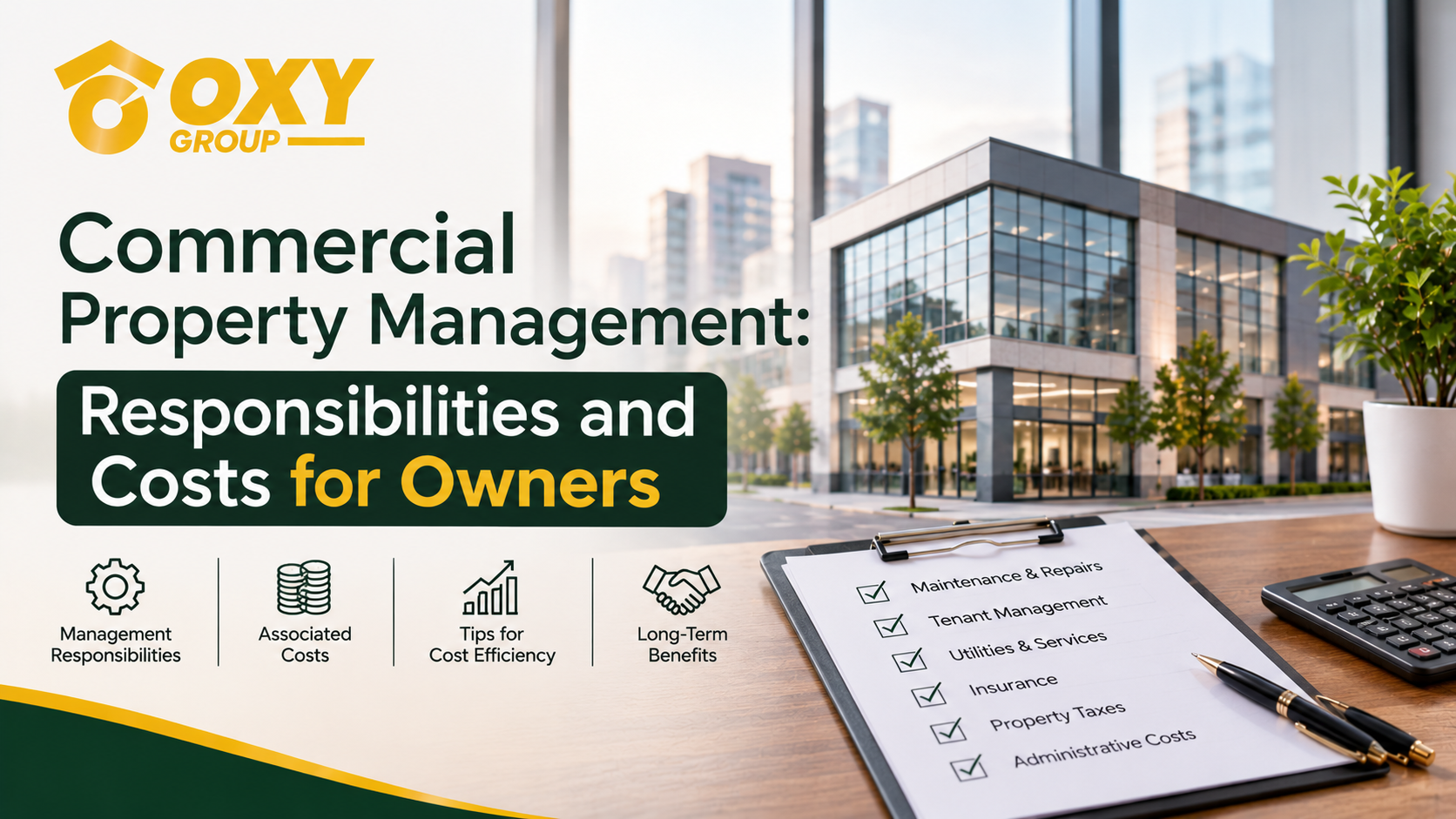
Owning a commercial property can be a great way to generate rental income and build a long-term wealth source. However, purchasing the property is only the beginning. Once the investment is made, maintaining the space, managing tenants, handling maintenance, and keeping expenses under control become equally important because this can impact the property.
Whether you own a retail shop, office space, commercial floor or a whole commercial building, efficient property management can make a big difference to the performance of your investment.
Commercial property owners should be aware of the management responsibilities and costs involved in the process. Let’s explore the basics of commercial property management and what owners need to keep in mind.
What Is Commercial Property Management?
Commercial property management is the operation, control and supervision of commercial real estate as a service to its owner. Commercial property management is the operation and maintenance of commercial real estate for the owner. So it’s about keeping the property, keeping it desirable for renters, and keeping the cash flow positive. “They may be responsible for collecting rent, answering tenant requests and keeping up the common areas or arranging repairs.
Some property owners manage their properties themselves, while others hire professional property management companies to take care of the day-to-day operation.
Key Responsibilities of Commercial Property Owners
1. Tenant Management and Communication
Managing tenants is one of the most important responsibilities of a commercial property owner.
Owners should keep an open line of communication with tenants, address their concerns and make sure the lease agreement terms are followed.
This could include:
- Responding to maintenance requests.
- Talking about dues and rent payments.
- Management of lease renewals and extensions.
- Tenant complaints response.
- Property inspection scheduling.
A good relationship between owner and tenant can lead to longer occupancy and prevent unnecessary disputes.
2. Rent Collection and Financial Management
Many investors will buy commercial properties for the income they are able to receive regularly from rent. Hence, effectively managing the rent collection is a must.
Property owners should maintain clear records of rental payments, security deposits, verified documents, maintenance charges, and other applicable expenses.
They also need to monitor overdue amounts and adhere to the lease agreement while handling outstanding dues.
If you keep your financial records in an organised way, you can better understand how the property is really performing and plan for future expenses.
3. Property Maintenance and Repairs
A commercial property requires regular maintenance to remain functional and appealing to businesses.
Common maintenance responsibilities may include:
- Electrical and plumbing repairs.
- Cleaning and upkeep of common areas.
- Lift and equipment maintenance.
- Security systems and fire safety equipment.
- Parking and access maintenance.
- Repairs to walls, flooring, and other structural components.
Some responsibilities may belong to the owner, while others may be handled by the tenant or building management. The lease agreement and applicable regulations should clearly define these obligations.
4. Legal Compliance and Documentation
Commercial property owners must also ensure that their properties comply with applicable legal and regulatory requirements; verification of the documents is the important factor.
Depending on the property and ownership arrangement, this may involve maintaining relevant approvals, insurance documents, lease agreements, and records of applicable charges.
Owners should also understand their responsibilities regarding building safety, permitted property use, and other applicable requirements.
Professional legal or tax advice may be useful when dealing with complex documentation or compliance matters.
5. Managing Vacancies and Renewals
When a tenant moves out, the owner may need to get the property ready for the next tenant.
This can involve viewing the space, making any repairs that need to be made, marketing the property, negotiating rental terms and finalising a new lease agreement.
Having some insight into lease expirations can help you reduce the time a unit sits empty and prevent unnecessary breaks in rental income.
Commercial Property Management Costs: What Should Owners Expect?
Property management expenses vary depending on the location, property type, size, condition, and management arrangement.
Here are some common costs commercial property owners may need to consider.
1. Property Management Fees
If you hire a professional property manager, you may pay a fixed monthly fee or a percentage of the rental income.
The fee depends on the services included, the complexity of the property, and the agreement with the management company.
Before hiring a manager, clarify whether rent collection, tenant communication, inspections, and maintenance coordination are included in the charges.
2. Maintenance and Repair Expenses
Routine maintenance and unexpected repairs can affect your property’s profitability.
Owners should budget for regular upkeep as well as occasional larger expenses, such as equipment replacement or major repairs. Ignoring maintenance may lead to higher costs later and could affect tenant satisfaction.
3. Security and Cleaning Charges
Depending on the property, expenses may include security personnel, housekeeping, waste management, and common area maintenance.
For commercial buildings with shared facilities, these expenses may be collected through maintenance charges or managed by an association or facility management team.
4. Insurance and Property Taxes
Owners should also account for applicable property taxes and insurance premiums.
Insurance requirements and costs depend on the property’s location, type, coverage, and other factors. It is important to review the coverage carefully rather than choosing a policy based only on its price.
5. Vacancy and Leasing Expenses
A vacant commercial property can still generate expenses even when no rental income is coming in.
Owners may need to pay maintenance charges, utilities, property taxes, and marketing or broking expenses while searching for a tenant.
This is why vacancy planning is an important part of commercial property management.
Should You Manage Your Commercial Property Yourself?
Self-management might work best for owners with a small portfolio, tenants nearby and time to handle the day-to-day.
But handling multiple properties or dealing with intricate tenant requirements can be a challenge.
Professional property management can be helpful if owners need help collecting rent, coordinating tenants, maintenance and day-to-day operations.
Whether the right choice depends on the owner’s availability, experience, property size and budget.
Final Thoughts
Commercial property ownership is more than just collecting rent. Good management is important to keep the property in good condition, keep tenants happy and protect the long-term value of the property.
Knowing in advance the management responsibilities and costs when buying a commercial property can assist investors in preparing realistic budgets and avoiding unexpected expenses.
If you’re planning a commercial real estate investment, our previous blog, Commercial Property Investment Checklist for 2027, covers important factors buyers should evaluate before making an investment decision.
At Oxy Infra, understanding the practical aspects of commercial property ownership can help investors approach their real estate investments with greater confidence.
Frequently Asked Questions (FAQs)
1. What is meant by managing commercial property?
Commercial property management usually includes communicating with tenants, collecting rent, scheduling maintenance, keeping financial records, managing leases and maintaining the property.
2. What is the cost of commercial property management?
Costs vary depending on size, location, management needs and services offered. Owners may pay a fixed management fee, a percentage fee or separate charges for specific services.
3. Can owners of commercial property manage their own properties?
Yes. If you have the time and resources to manage tenant communication, maintenance, rent collection and more, you can self-manage your properties.
4. Who is responsible for maintaining commercial properties?
Responsibilities vary by lease agreement and property management arrangement.
5. Why is commercial property management important?
Proper management helps maintain the property’s condition, improve tenant satisfaction, manage expenses, and support consistent rental income over time.