
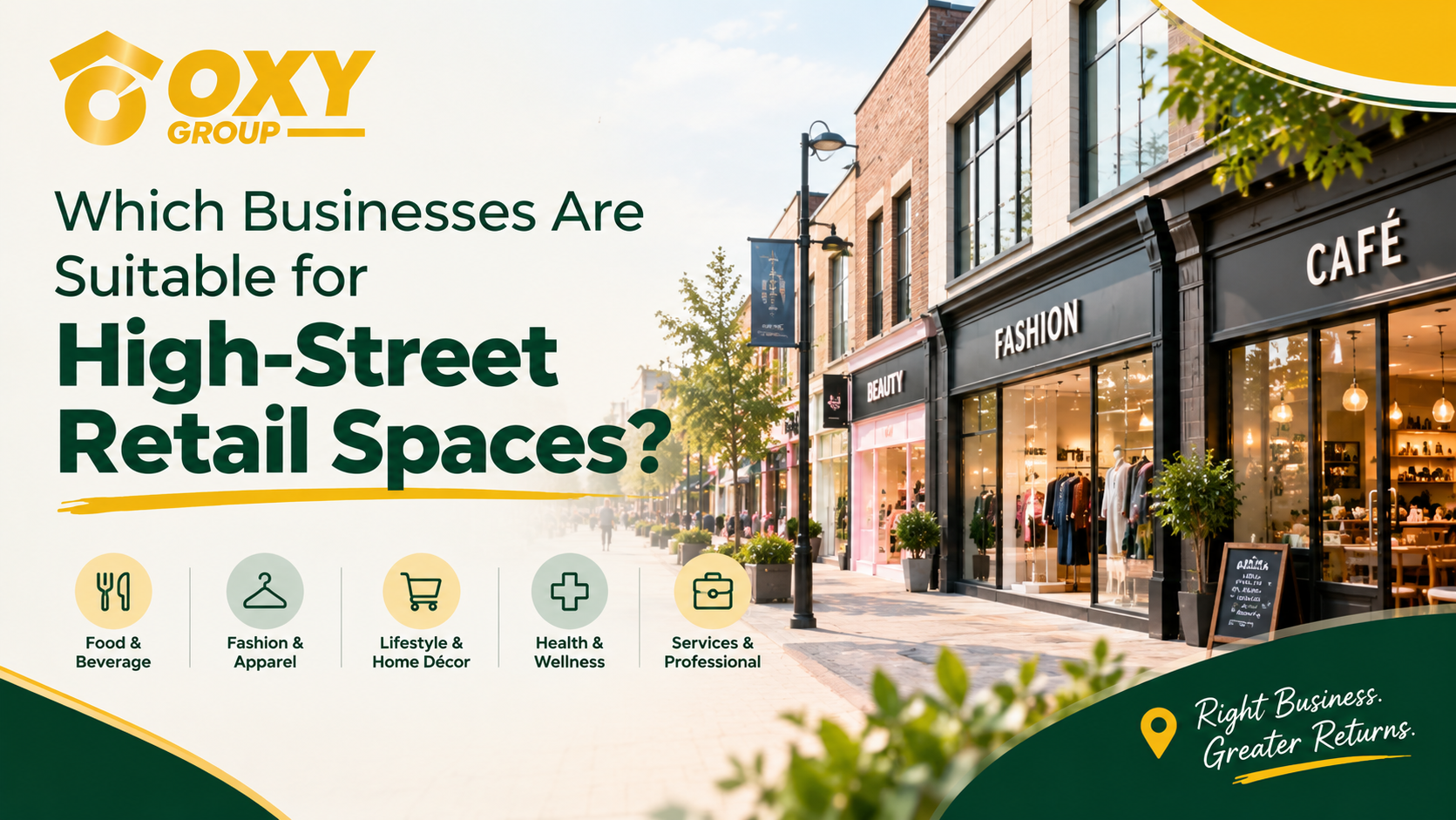
Choosing the right location is an important decision for any retail business. Even if a business offers good products and services, it may struggle if customers find the location inconvenient or difficult to access. That’s one reason why high street retail spaces remain attractive to retailers, service providers and commercial property investors.
High-street retail premises are shops located on busy roads, market streets or commercial areas where customers can walk in, browse and purchase items. They often have direct access to the street and visibility to passersby, something that shopping malls don’t.
High-street retail spaces in the developing commercial areas of Ghaziabad and Delhi NCR offer opportunities for different types of businesses. Retailers can make the right choice of space by understanding customer demand, access and the nature of the business.
1. Clothing and Fashion Stores
High-street retail locations can be a good idea for businesses such as clothing stores. A lot of customers like to go to physical stores to check the fabric quality, try different sizes and compare styles before they buy.
High-street locations can be good for boutiques, ethnic wear stores, casual clothing outlets, footwear shops and fashion accessory stores.
Visibility is particularly important for these businesses. An attractive shopfront, clear signage and an inviting display can encourage people walking past to enter the shop.
The target audience should also be considered. A store selling premium fashion may perform better in an area with customers who can afford higher-priced products, while affordable clothing stores may benefit from busy local markets and residential neighbourhoods.
2. Cafes, Bakeries and Quick-Service Restaurants
High-street retail spaces are also good for food businesses, as customers are often looking for convenient places to eat, have coffee or grab snacks while they shop or travel.
Depending on the location and facilities, cafes, bakeries, takeaway counters, juice shops and quick-service restaurants can be suitable options.
For example, a bakery near residential societies may attract regular customers purchasing bread, cakes and snacks. A cafe near offices or educational institutions may receive demand during breakfast breaks, lunch hours and evenings.
However, food businesses need more than a visible location. Buyers or tenants should check whether the property allows food-related activities and has suitable ventilation, drainage, water supply, electricity and waste-disposal arrangements. Required licences and local permissions must also be considered.
3. Grocery Stores and Convenience Shops
Grocery stores and convenience shops can be practical choices for high-street locations near residential areas. People regularly need household essentials, packaged foods, personal care products and other everyday items.
These businesses often depend on the same customers rather than occasional purchases. A shop that is easy to reach on foot or by a short drive can become a convenient option for nearby residents.
Small supermarkets, dairy shops, packaged food outlets and neighbourhood convenience stores may work well in areas with sufficient residential demand.
Before choosing a location, area, or business owner, they should assess nearby competition, customer footfall, parking availability, and the size of the catchment area. A location surrounded by homes may be promising, but its success will still depend on the number of potential customers and their shopping preferences.
4. Salons, Spas and Personal Care Services
Salons, beauty studios and personal care businesses can be suitable for high-street retail spaces because customers often prefer accessible locations close to their homes or workplaces.
Hair salons, unisex salons, nail studios and beauty service outlets may attract regular customers when they provide consistent service and convenient appointment timings.
A visible shopfront can help people discover the business, while nearby residential communities can support repeat visits.
For these businesses, the internal layout is just as important as the location. The property should have sufficient space, appropriate plumbing and ventilation where required, and a layout that provides comfort and privacy.
Business owners should also consider nearby competitors and whether the local market has demand for the type of services they plan to offer.
5. Pharmacies and Healthcare-Related Retail
Pharmacies, optical stores and selected healthcare-related retail outlets can benefit from locations that are easy for customers to access.
A pharmacy near residential societies, clinics or healthcare facilities may attract customers looking for medicines and everyday healthcare products. Optical stores may also benefit from visibility and convenient access.
These businesses depend on trust, availability and customer convenience. A location that allows people to stop easily can be particularly useful.
However, healthcare-related businesses must meet the applicable licensing, registration and operational requirements. Buyers should verify whether the property is suitable for the intended business before signing a lease or purchasing the unit.
6. Mobile Phone and Electronics Stores
Mobile phone shops, accessory stores and small electronics outlets can also be suitable for high-street locations. Customers often visit these shops to compare products, purchase accessories, ask questions or seek assistance with their devices.
Phone covers, chargers, earphones and other accessories may encourage walk-in purchases, while repair services can bring customers back regularly.
These stores can benefit from a clear shopfront, good lighting and convenient access. Locations near established markets, transport routes or other electronics retailers may attract people who are already visiting the area to shop.
7. Banks, Salons and Other Service-Based Businesses
High-street retail spaces are not limited to businesses that sell physical products. Service-based businesses can also use these locations to reach customers.
Examples include insurance offices, travel agencies, courier outlets, mobile repair centres, tailoring shops and selected financial service offices.
Such businesses may not require the same amount of display space as a clothing or grocery store, but they still benefit from accessibility and visibility.
The most suitable location depends on the target audience. A courier outlet may work well near residential and business areas, while a tailoring shop may attract regular customers from nearby neighbourhoods.
Before leasing or purchasing a unit, businesses should check whether the property’s permitted use and building rules allow the intended activity.
8. What Should Businesses Consider Before Choosing a High-Street Space?
Although high-street retail locations can offer good visibility, selecting the right property requires careful evaluation.
Here are some important factors to consider:
- Footfall: Check whether enough potential customers visit or pass through the area.
- Target audience: Understand the needs, preferences and spending habits of nearby customers.
- Accessibility: Look at road connectivity, pedestrian access, parking and public transport.
- Competition: Identify similar businesses nearby and assess whether the market has room for another outlet.
- Rental and operating costs: Calculate rent, maintenance, electricity, staffing and other expenses.
- Property layout: Make sure the size, frontage, utilities and internal arrangement suit the business.
- Legal permissions: Verify the property’s permitted use and any licences or approvals required for the planned activity.
A high-street location should match the business model rather than being selected only because it appears busy or attractive.
Explore OXY Infra.
If you are looking for a commercial property with potential for rental income, location and accessibility should be among your key considerations. Oxy Hi Street offers commercial property options for businesses and investors looking to explore opportunities in Ghaziabad.
To know more about Oxy Hi Street:
👉 Download the brochure to explore project details and available options, and connect with the Oxy Infra team for more information.
Final Thoughts
High-street retail spaces can support a huge range of businesses, from clothing stores and cafes to convenience shops and service outlets. Their direct access and street-level visibility can help businesses connect with customers, but the right choice depends on the location and the needs of the target audience.
For retailers exploring commercial spaces in Ghaziabad or Delhi NCR, it is important to look beyond the property’s appearance. Customer demand, accessibility, competition, operating costs and legal suitability should all be considered before making a decision.
A well-chosen high-street retail space can provide a practical foundation for a business, while careful property evaluation can help investors make more informed commercial real estate decisions.
Frequently Asked Questions (FAQs)
1. Which businesses are best suited for high-street retail spaces?
Clothing stores, cafes, bakeries, grocery shops, pharmacies, salons, mobile accessory stores and service outlets can be suitable, depending on local demand and property facilities.
2. Are high-street retail spaces suitable for small businesses?
Yes. Small businesses can benefit from direct street access and visibility. However, they should compare rental costs, competition and expected customer demand before choosing a location.
3. How important is footfall for a high-street shop?
Footfall can help attract potential customers, especially for businesses that depend on walk-in purchases. However, the quality of footfall and its match with the target audience are equally important.
4. What should investors check before buying a high-street retail shop?
Investors should assess location, frontage, accessibility, nearby businesses, rental demand, property documentation, permitted use and total ownership costs.