
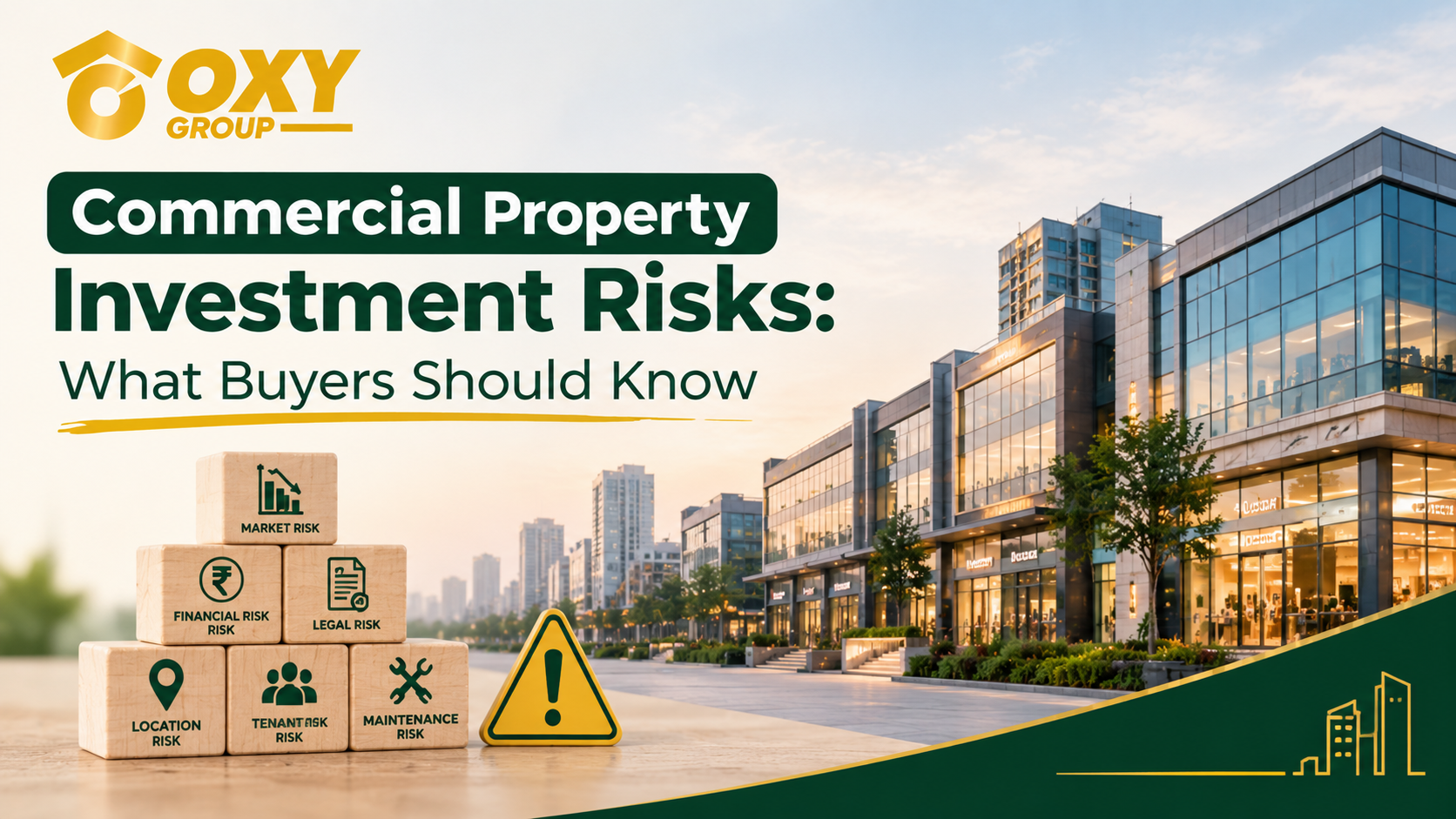
Investing in commercial property can be a good way to build long-term wealth and earn rental income. Shops, office spaces, retail units and commercial buildings can attract businesses looking for a suitable place to operate. However, buying commercial real estate is a major financial decision, and it comes with risks that buyers should understand before investing.
In growing markets like Ghaziabad and the wider Delhi NCR region, commercial developments are attracting attention from investors. Better connectivity, new business centres and growing residential areas can create opportunities, but not every commercial property guarantees good returns.
Before making a decision, buyers should look beyond the property’s price and appearance. Understanding the possible risks can help them make a more informed investment.
1. Choosing the Wrong Location
Location is one of the most important factors in commercial real estate. A property may look attractive, but if it is situated in an area with limited business activity, attracting tenants can become difficult.
For example, a retail shop in a busy market may receive more walk-in customers than a similar shop in an isolated commercial complex. Similarly, an office space near public transport, residential neighbourhoods and major roads can be more convenient for employees and customers.
Before investing, check the infrastructure, accessibility, parking facilities and existing business activity. In Ghaziabad, buyers can also evaluate connectivity to Delhi, Noida and other parts of NCR.
2. Vacancy Risk and Uncertain Rental Income
One of the biggest problems for commercial property investors is the possibility of a vacant property. Unlike a fixed deposit, a commercial property does not provide guaranteed monthly income.
When a tenant moves out or a property is vacant, you could be without rental income for several months. However, during this period, the owner may still be required to pay maintenance charges, property tax, loan installments and other expenses.
For instance, an investor purchasing a shop mainly for rental income should check whether similar shops in the area are occupied and what types of businesses are operating nearby.
It is also useful to understand local rental demand and the average time properties take to find tenants. A property with realistic rental expectations may be a better choice than one promising unusually high returns.
3. High Initial Investment and Additional Costs
The purchase price is not the only expense involved in buying commercial real estate. Buyers should also account for registration charges, applicable stamp duty, legal fees, maintenance deposits and other transaction-related costs.
After purchasing the property, there may be recurring expenses such as common-area maintenance, repairs, insurance and property taxes.
These costs can affect the actual return on investment. A property that appears affordable initially may become expensive when all the additional charges are considered.
Before finalising a purchase, prepare a budget that includes both the initial investment and expected ongoing expenses.
4. Legal Issues and Incomplete Documentation
Legal problems can create serious difficulties for commercial property buyers. Disputes over ownership, unclear land titles, unauthorised construction or missing approvals can affect the property’s usability and future resale.
Buyers should verify ownership documents, the property’s permitted land use, relevant building approvals and applicable occupancy or completion certificates. They should also check whether the project is required to be registered under RERA and, if so, verify its registration and details through the relevant state RERA authority.
For properties in Ghaziabad, buyers can check the applicable approvals and records with the relevant development authority, depending on the property’s location and project type.
It is advisable to have a qualified property lawyer review the documents before paying a substantial advance or signing the final agreement.
5. Lower-Than-Expected Returns
Many investors purchase commercial properties with the expectation that rental income will cover their expenses and generate a healthy profit. However, actual returns may be lower because of vacancies, maintenance costs, changing market conditions or lower income than anticipated.
For example, a property may appear to offer an attractive rental yield when calculated using the expected rent and purchase price alone. Once additional expenses and vacant periods are considered, the actual return may be considerably lower.
Investors should calculate rental yield using realistic figures and account for recurring expenses. They should also compare similar properties in the same area rather than relying only on the seller’s projected returns.
Remember that rental yield and capital appreciation are different. A property may generate rental income without experiencing significant price growth, or its market value may rise even when rental returns remain modest.
6. Difficulty in Reselling the Property
Commercial properties are not always easy to sell quickly. The resale process depends on factors such as location, market demand, property condition, rental performance and the availability of interested buyers.
A shop in a less active market or an office space with limited demand may take longer to sell than an occupied property in a well-established commercial area.
This can become a concern when an investor needs money urgently. Selling a property quickly may also require accepting a lower price than expected.
Before investing, consider your financial goals and how long you can keep the money invested. Commercial real estate is generally better suited to buyers who can plan for a longer holding period rather than those who may need immediate access to their funds.
7. Changes in Market Demand and Business Activity
Commercial property demand can change over time. New developments, changing consumer preferences, business closures and competition from nearby markets can influence the performance of a property.
For example, a retail unit that attracts customers today may face greater competition if several new shopping complexes open nearby. Similarly, office spaces may experience changing demand as businesses adjust their workplace requirements.
Infrastructure improvements can support commercial growth, but they do not guarantee that every nearby property will appreciate in value.
Before investing, study the area’s existing commercial activity, upcoming developments and competing projects. Focus on the property’s long-term suitability for businesses instead of relying only on future growth expectations.
8. How to Reduce Commercial Property Investment Risks
Although commercial real estate involves uncertainty, careful planning can help buyers avoid common mistakes.
Here are a few practical steps to follow before investing:
- Research the location: Check connectivity, nearby businesses, customer access and local demand.
- Verify all documents: Review ownership, approvals, land use and applicable RERA details.
- Calculate the total cost: Include purchase-related charges, maintenance and other recurring expenses.
- Check rental potential: Compare actual rents and occupancy levels in similar properties.
- Keep emergency funds: Prepare for vacancies, repairs and unexpected expenses.
- Compare multiple options: Evaluate location, price, rental potential and resale prospects before making a decision.
- Avoid guaranteed-return claims without verification: Carefully review the terms, supporting documents and risks behind any promised returns.
Taking these steps can help investors make decisions based on practical information rather than marketing claims alone.
Explore OXY Infra.
If you are looking for a commercial property with potential for rental income, location and accessibility should be among your key considerations. Oxy Hi Street offers commercial property options for businesses and investors looking to explore opportunities in Ghaziabad.
To know more about Oxy Hi Street:
👉 Download the brochure to explore project details and available options, and connect with the Oxy Infra team for more information.
Final Thoughts
Commercial property investment can be a useful part of a long-term financial plan, but it requires more than choosing an attractive building or a promising location. Buyers need to understand the risks associated with rental demand, legal documentation, ongoing expenses and future resale.
For anyone considering commercial property in Ghaziabad or Delhi NCR, taking time to compare projects and verify the details can make a real difference. A well-informed decision starts with realistic expectations, careful research and a clear understanding of the property’s potential as well as its limitations.
Frequently Asked Questions (FAQs)
1. What are the biggest risks of commercial property investment?
The main risks include vacant properties, lower-than-expected rental income, legal issues, high maintenance costs and difficulty reselling the property.
2. Is commercial property investment safe in Ghaziabad?
Commercial property in Ghaziabad may offer investment opportunities, but the outcome depends on the location, property quality, legal approvals, rental demand and purchase price.
3. How can I check the rental potential of a commercial property?
Compare rents for similar properties, check occupancy levels in the surrounding area and assess demand from businesses that could use the space.
4. Should I buy a commercial property for rental income or appreciation?
It depends on your financial goals. Rental income focuses on recurring earnings, while capital appreciation depends on the property’s market value increasing over time. Some investors consider both factors.
5. What documents should I check before buying commercial property?
Check ownership and title documents, applicable building and land-use approvals, completion or occupancy certificates where relevant, the sale agreement and RERA registration where applicable. A property lawyer can help verify the documents.