
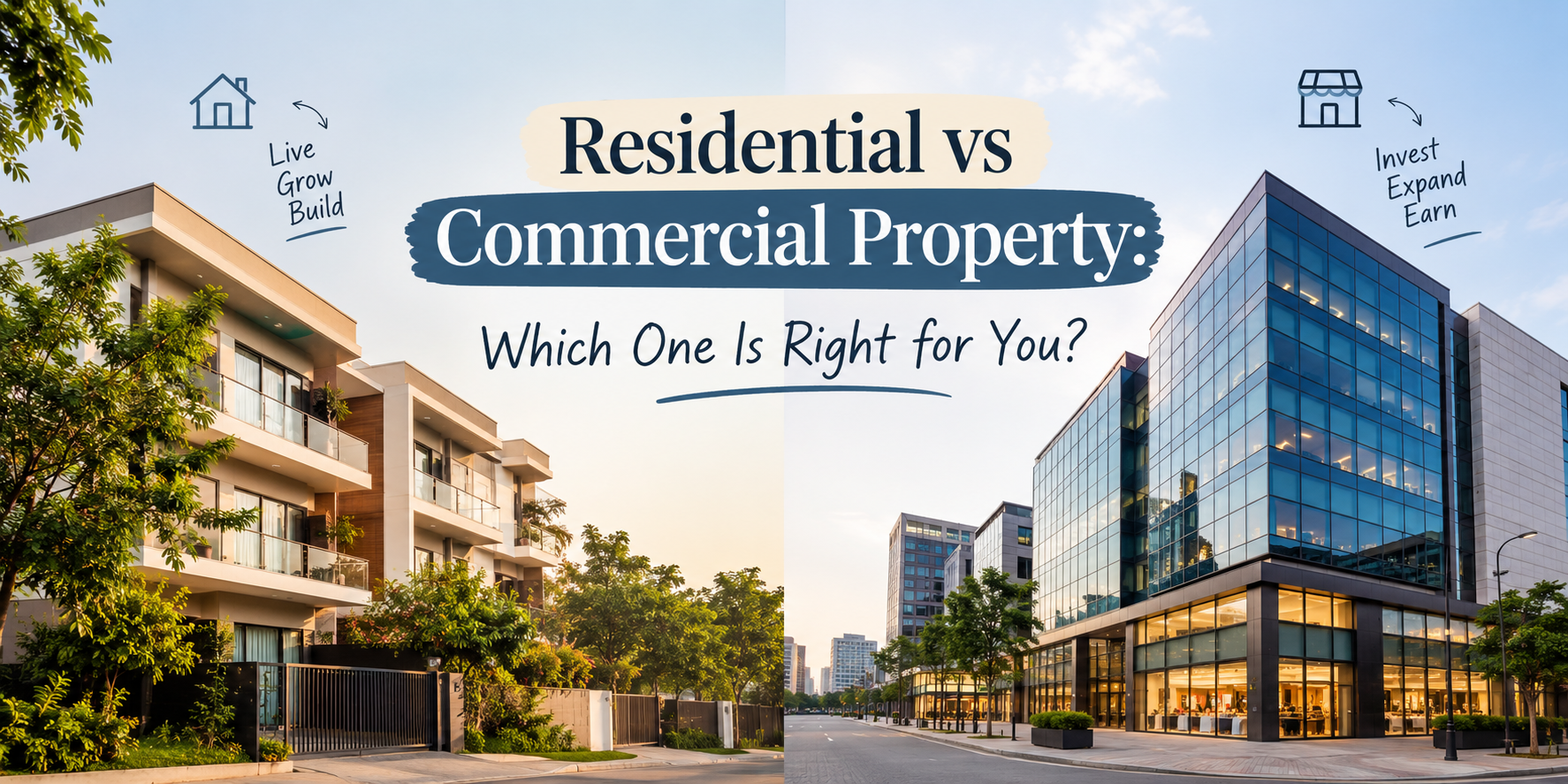
Buying a property is a big financial decision, but the first question isn’t always “Where should I buy?” Sometimes the more important question is “What type of property should I buy?” Residential vs commercial property is an important distinction to understand before making a property decision, as both serve very different purposes. A home is mainly about family, living, comfort, and everyday convenience, while a commercial property is usually purchased for business use or rental income.
Both can have their own advantages, but the right choice depends on your budget, purpose, convenience, location, and long-term plans.
So, before making a decision, let’s understand the basic difference between residential and commercial property and what you should consider.
What Is Residential Property?
Residential property is designed primarily for people to live in. This includes apartments, flats, villas, independent houses, and other types of homes.
For many buyers, purchasing a residential property is not just an investment. It can also mean having a place to call home.
When choosing a residential property, people usually look at factors such as:
- Location and connectivity
- Nearby schools and hospitals
- Safety and neighbourhood
- Parks and open spaces
- Daily shopping facilities
- Public transport
- Amenities within the residential project
For families, these everyday factors can make a big difference in how comfortable the property feels over the years.
What Is Commercial Property?
Commercial property is generally used for business or commercial activities. Shops, offices, retail spaces, showrooms, and other business-orientated spaces fall under this category.
Unlike a home, the success of a commercial property can depend heavily on factors such as locality, visibility, accessibility, surrounding businesses, customer footfall, and the demand for commercial space in that location.
For example, a shop located on a busy commercial stretch may have very different prospects from a shop in a less accessible location.
This is why location plays a particularly important role when evaluating commercial property.
Residential vs Commercial Property: What Is the Difference?
| Factor | Residential Property | Commercial Property |
| Main purpose | Living or residential rental | Business or commercial rental |
| Common examples | Flats, apartments, villas, houses | Shops, offices, showrooms |
| Location priorities | Schools, hospitals, transport, daily facilities | Visibility, access, business activity, footfall |
| Typical users | Families and individuals | Businesses and customers |
| Maintenance | Depends on property and society | Depends on property and usage |
| Main consideration | Comfort and liveability | Business suitability and accessibility |
1. Main Purpose
A residential property is primarily meant for living. You may buy an apartment or house for yourself, your family, or as a residential rental property.
Commercial property, on the other hand, is generally used for business purposes. This could include an office, shop, showroom, or other commercial space.
2. Common Examples
Residential properties include flats, apartments, villas and independent houses. These properties are designed around everyday living and usually include features that support residential life.
Commercial properties can include shops, offices and showrooms. Their design and location are generally planned around business activities and customer or employee access.
3. Location Priorities
Location matters for both types of property, but the priorities can be different.
For a home, buyers may look for nearby schools, hospitals, markets, public transport, workplaces and recreational spaces.
For commercial property, factors such as visibility, road access, business activity, parking and customer footfall can become more important. A location that works well for a family may not necessarily work well for a retail business.
4. Typical Users
Residential properties are generally occupied by individuals and families. Their requirements usually revolve around comfort, privacy, safety and everyday convenience.
Commercial properties are used by businesses, employees and customers. As a result, accessibility, functionality and the needs of the particular business become important considerations.
5. Maintenance
Maintenance requirements can vary depending on the type and size of the property.
For residential properties, costs may include society maintenance, repairs, utilities and upkeep of the home.
For commercial properties, maintenance can depend on the type of space and how it is being used. Businesses may also need to consider expenses related to interiors, utilities, common areas and other operational requirements.
6. Main Consideration
When buying a residential property, the focus is usually on comfort, convenience and suitability for everyday life. Buyers may think about whether the home works for their family today and in the future.
With commercial property, the focus is more likely to be on business suitability, accessibility and visibility. The property needs to work for the intended business and the people who will use it.
Which One Should You Choose?
There is not an answer that works for everyone. If your priority is buying a home for yourself or for your family, a residential property may naturally be more suitable.
If you already have a business or if you are planning to start one or if you are specifically looking for an asset, then commercial property may make more sense.
Your decision should also consider how you plan to hold the property, how much money you are comfortable investing, and what kind of property demand exists in that particular location.
Things to Check Before Buying a Residential Property
If you are considering a home, do not make the decision based on the appearance of the property.
Check:
- Connectivity to your workplace or important locations
- Nearby schools and healthcare facilities
- Safety and neighbourhood environment
- Quality of construction
- Available amenities
- Maintenance arrangements
- Developer’s track record
- Property documents
- Future development around the location
Most importantly, think about whether the property will continue to suit your lifestyle a few years from now.
Things to Check Before Buying a Commercial Property
Property requires a slightly different approach. Before buying, consider:
- Visibility of the property
- Road and public transport connectivity
- Customer or pedestrian movement
- Parking availability
- Surrounding businesses
- Type of businesses for the location
- Demand for similar commercial spaces
- Maintenance and other recurring costs
- Property documents and approvals
A commercial property can look attractive on paper, but its practical value depends greatly on how suitable the location is for the intended business or tenant.
Don’t Choose a Property Only Because It Looks Like a Good Investment
A property may look attractive because of its location, design, amenities or expected development. That does not automatically mean it will be the right choice for you.
Before buying, ask yourself a simple question:
- Why am I buying this property?
- Can I comfortably afford the cost?
- Does the location suit my purpose?
- What are the ongoing expenses?
- What is the actual demand for this type of property in the area?
- Taking time to answer these questions can help you make an informed decision.
- Commercial: Look at Your Long-Term Goal
- The choice between commercial property ultimately comes down to your individual needs.
If you want a place to live and build your life around, residential property is the natural starting point. If your focus is business use or a commercial asset, you may want to explore property instead. If you are investing, do not look at the property in isolation. Consider the location, surrounding infrastructure, demand, property quality and your own financial goals together.
Final Thoughts
Residential and commercial properties are both parts of the real estate market, but they are meant for different purposes. Instead of asking which one is universally better, ask which one fits your needs and long-term plans.
Whether you are looking for a home. Considering a commercial space takes time to understand the location, compare your options, check the property’s details and make the decision only after doing your due diligence.
At OXY Infra we believe that a property decision should be based on information and careful consideration. Understanding your requirements first can help you choose a property that makes sense not today but for the years ahead.
Exploring property options in Ghaziabad? Take a look at OXY Infra’s residential and commercial developments to understand what suits your requirements.
FAQ
1. What is the fundamental distinction between residential and commercial property?
Residential property is meant for human residence, whereas commercial property is meant for office, shop, showroom, etc.
2. What considerations should one keep in mind while purchasing a residential property?
One should consider its location, good connectivity, proximity to schools and hospitals, security, amenities, construction quality, maintenance and reputation of the developer.
3. What factors are important while purchasing a commercial property?
Consider access, visibility, parking, nearby business activity, customer traffic, demand for such spaces, maintenance cost, and proper documentation of the property.
4. Can both residential and commercial property be leased?
Yes. Both can be leased, depending upon the demand for that type of property in the given location.
5. How does one choose between residential and commercial property?
One should consider the purpose of purchasing, budget, intended use, location, and other relevant factors.