
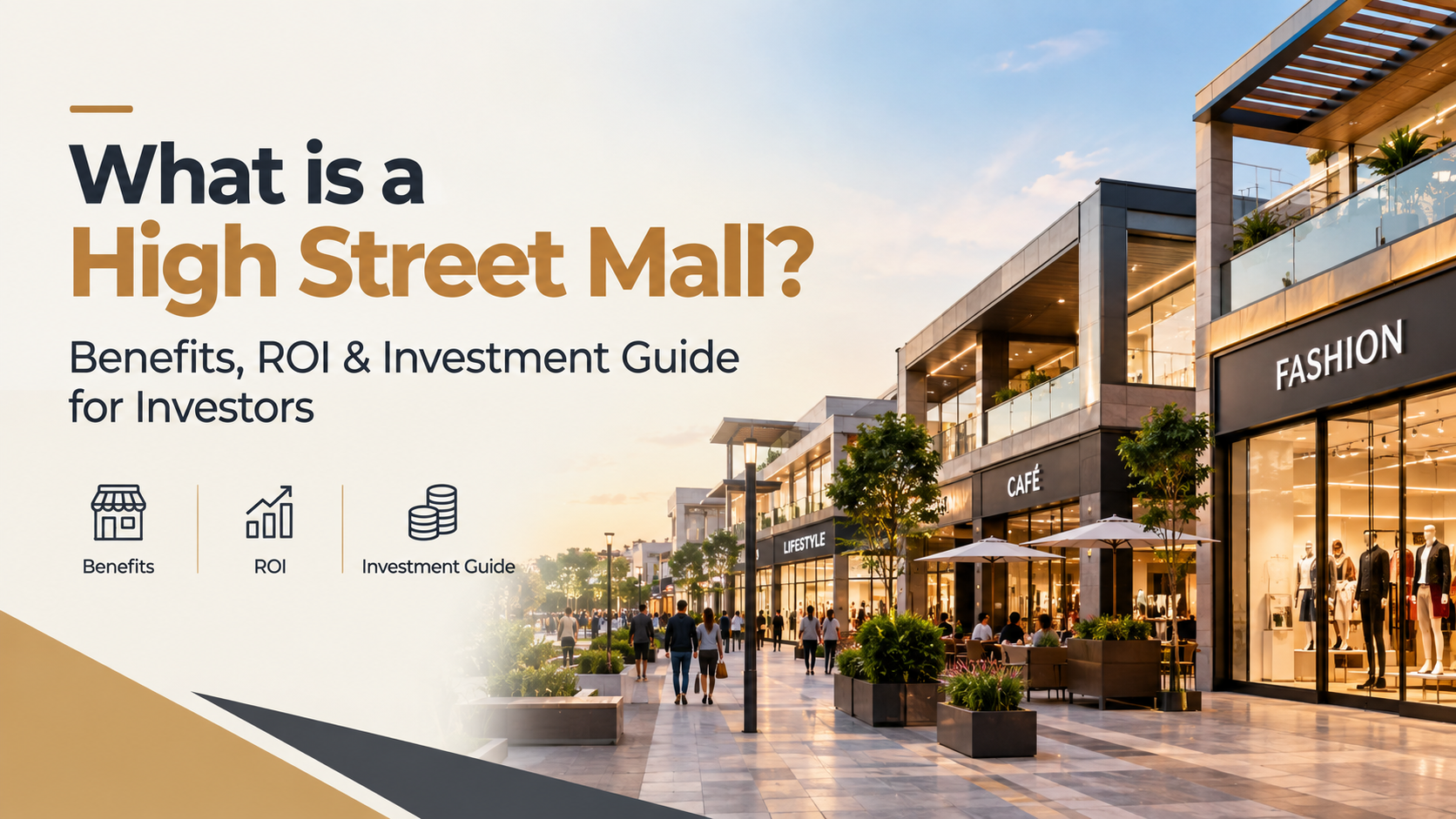
A high street mall is a type of commercial retail development where the shops are directly connected to the main road instead of being located inside a closed mall. In simple terms, it is an open shopping environment where customers can directly walk into stores without going through multiple floors, lifts, or corridors. These types of spaces are specially designed to provide maximum visibility to brands and easy access to customers, making high street mall investment a highly attractive option for both businesses and investors.
Before going into details, here’s a simple comparison to understand the concept clearly:
| Factor | High Street Mall | Traditional Mall |
| Location | Main road / open retail area | Enclosed building |
| Visibility | High (road-facing shops) | Limited (inside structure) |
| Footfall | Organic walk-in traffic | Depends on anchor stores |
| ROI Potential | High | Moderate |
| Accessibility | Easy entry | Controlled access |
Why High Street Malls Are Growing in Demand
The main reason behind this is changing customer behaviour. Nowadays, people can prefer quick, convenient, and open shopping experiences rather than spending their time inside the malls. At the same time, brands are also looking for locations where they can get better visibility for their customers and get engaged with them properly. High street malls perfectly fulfil both these needs.
Key Benefits of Investing in High Street Malls:
High Footfall:
Properties of high street malls attract more people because they are located on main roads, where daily movement is already high. As opposed to enclosed malls, these locations benefit from continuous visibility, which helps to maintain consistent customer flow without relying heavily on promotions or marketing efforts.
They benefit from:
- Daily road traffic ensures continuous visibility
- Walk-in customers increase naturally due to location
- Nearby residential and commercial crowd
Better Visibility:
One of the strongest advantages of high street shops is their visibility, which can attract customers without prompting any banners. Since the stores are directly facing the road, they are easily noticeable to anyone passing by; that significantly improves brand presence.
- Road-facing shops attract instant attention.
- Strong visibility improves brand recognition
Higher Rental Income:
High street properties are known for offering better rental returns compared to traditional retail spaces. This is mainly because businesses are willing to pay a premium for locations that guarantee visibility and consistent customer flow. As demand from brands increases, rental values also remain strong.
- High demand from brands supports premium rents
- Better business performance leads to stable leasing
Easy Accessibility
High street shops provide direct and hassle-free access to customers, which makes them more convenient compared to traditional malls. There is no need to navigate through parking areas, entry gates, or multiple floors, making the overall experience quicker and more user-friendly.
Long-Term Growth Potential
High street developments are typically located in areas with strong demand and future growth potential. As infrastructure develops and surrounding residential or commercial areas expand, the value of these properties tends to increase steadily.
- Property value increases with area development.
- Strong resale potential supports long-term gains
What is ROI in high street investment?
Return on Investment, or ROI, refers to the returns generated from the amount invested in a property. In the case of high street properties, ROI is primarily driven by rental income and the appreciation in property value over time.
For example, if an investor purchases a commercial unit for around ₹50 lakh and earns a monthly rent of ₹40,000, the annual income would be approximately ₹4.8 lakh. This results in an estimated ROI of around 8–10%, depending on factors such as location, project quality, and market demand.
- Rental income provides regular monthly earnings
- Property appreciation increases overall investment value
Who Should Invest in High Street Property?
High street investments are best suited for individuals who are looking for stable, long-term returns along with consistent income potential. Unlike speculative real estate options, high street commercial properties offer a more predictable earning model, especially when located in high-demand areas with strong footfall and brand presence.
These types of properties are also a strong option for business owners who want to establish their own retail presence in a prime location. Since these shops offer direct road visibility and easy customer access, they can significantly contribute to brand exposure and business growth. Choosing the right location can have a direct impact on customer engagement and sales performance.
- Business owners aiming to establish their brand presence can leverage high street locations for better visibility and direct customer access.
- Individuals focused on long-term wealth creation can take advantage of capital appreciation in high-growth commercial areas.
- Buyers seeking stable rental income opportunities can rely on strong leasing demand and lower vacancy risks in prime locations.
- Investors targeting high-growth regions like NCR can capitalise on increasing footfall, infrastructure development, and retail expansion.
FAQs:
- What is a high street mall in India?
A. A high street mall is an open retail space with road-facing shops that offer easy access and high visibility for businesses. - Is investing in a high street mall profitable?
A. Yes, high street properties can offer strong rental income and long-term appreciation due to high demand and visibility. - What is the average ROI in high-street commercial property?
A. ROI typically ranges between 8% and 12%, depending on location, footfall, and project quality. - What are the benefits of investing in high street shops?
A. High street shops offer better visibility, higher footfall, strong rental demand, and long-term value growth. - Who should invest in high street commercial property?
A. It is ideal for investors seeking passive income, business owners, and individuals aiming for long-term wealth creation. - Which location is best for high street investment in NCR?
A. Areas like Ghaziabad, Noida Extension, and Raj Nagar Extension are emerging as strong high street investment zones. - What factors should be considered before buying a high street shop?
A. Key factors include location, builder reputation, footfall potential, and legal approvals like RERA. - How is High Street different from traditional malls?
A. High street shops are road-facing with direct access, while traditional malls are enclosed and depend on internal footfall.