
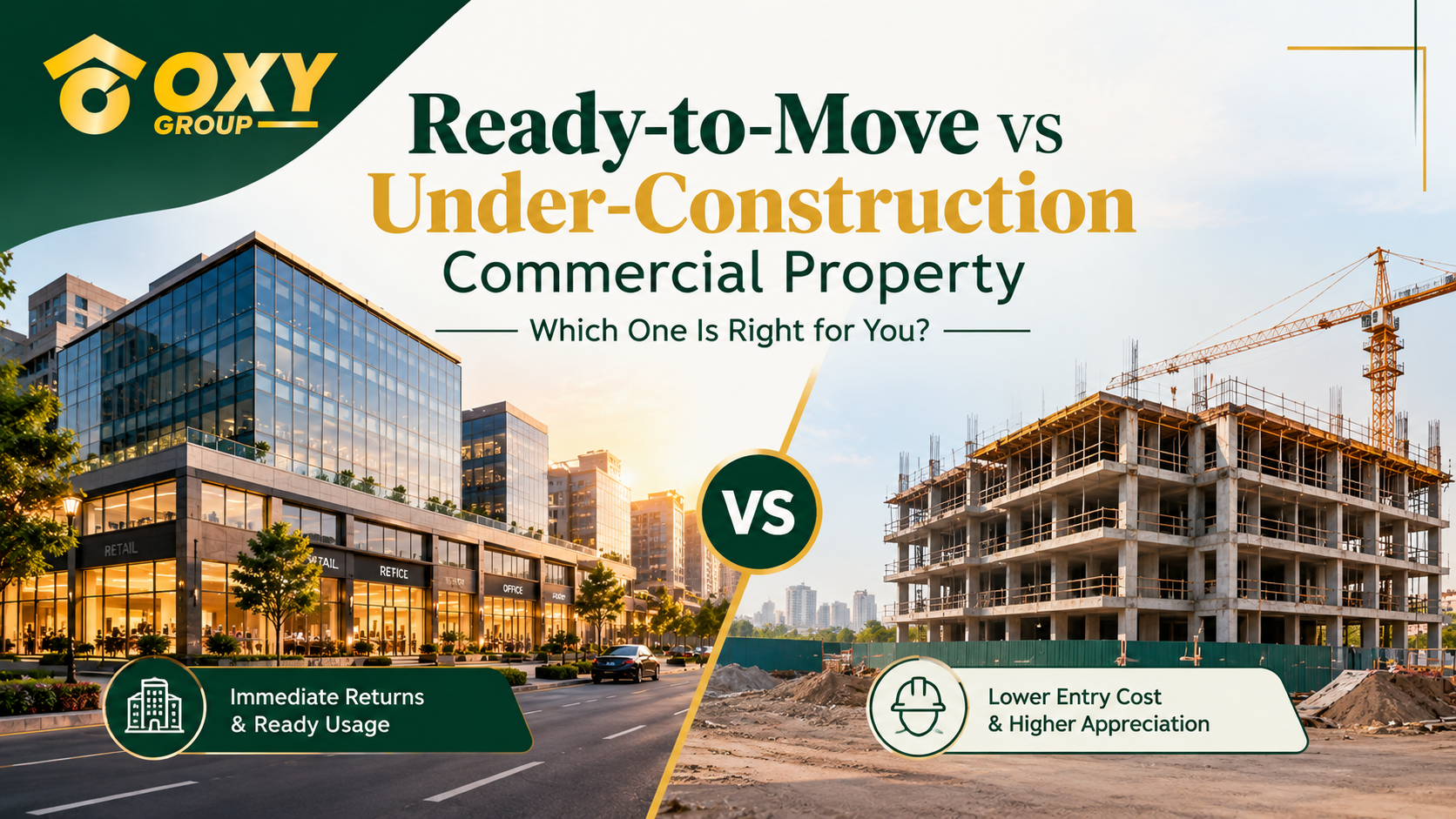
Buying a commercial property is a big decision, so whether you want to open your own shop, rent out a commercial space, or invest for the future, choosing the right property can make a real difference to your plans. One of the first decisions buyers face is whether to purchase a ready-to-move commercial property or an under-construction one. Both options have their own benefits and risks. A ready property may help you start using the space sooner, while an under-construction property may offer more choices during the development stage.
Ready-to-Move vs Under-Construction Commercial Property: A Quick Comparison
| Factor | Ready-to-Move Commercial Property | Under-Construction Commercial Property |
| Possession | Ready for possession, subject to required checks. | Depends on the construction timeline. |
| Business Setup | Start planning your business sooner. | Wait until the property is ready. |
| Rental Income | Find tenants sooner; income isn’t guaranteed. | Rent usually starts after possession and tenant placement. |
| Property Inspection | Inspect the actual unit and location. | Review plans and construction progress. |
| Payment Structure | May require earlier payment. | Payments may follow construction stages. |
| Construction Risk | Lower risk of construction delays. | Delays may affect possession. |
| Investment Planning | Suits buyers needing earlier use. | Suits buyers with a longer timeline. |
| Main Risk | Higher upfront cost or vacant units. | Delays and uncertain future demand. |
What Are the Key Differences Between Ready-to-Move and Under-Construction Commercial Property?
Ready-to-Move Commercial Property
A ready-to-move commercial property is a shop, office, showroom, or other commercial space where construction has been completed and possession can be offered according to the applicable terms and approvals. And one of the other advantages is that you may not have to wait for the building to be completed. If the property is suitable and all necessary conditions are met, you can plan your business setup sooner or start looking for tenants.
For example, if you want to open a retail shop, salon, clinic, or office, a ready property allows you to inspect the actual space before making your decision. You can check the entrance, visibility, surrounding businesses, parking arrangements, and general accessibility.
Benefits of Ready-to-Move Commercial Property:
- Immediate inspection: You can visit the actual unit and understand its size, layout, visibility, and condition.
- Faster business setup: You may be able to start interior work and operations sooner, subject to possession terms and approvals.
- Potential for earlier rental income: You can begin searching for tenants without waiting for the building to be completed.
- Better understanding of the location: You can observe nearby businesses, road access, parking, and customer activity.
- Less construction uncertainty: You do not have to depend on the completion of the building itself, although other legal and operational risks may remain.
Under-Construction Commercial Property
An under-construction commercial property is a shop, office, showroom, or commercial unit in a project where construction is still in progress. Some buyers consider this option because they have a longer investment timeline or prefer to purchase during an earlier stage of development.
The biggest difference is that you are making a decision based partly on what the completed project is expected to offer. And these types of underconstruction property may be based on the
The biggest difference is that you are making a decision based partly on what the completed project is expected to offer.
Benefits of Under-Construction Commercial Property
- More time for financial planning: The payment schedule may be spread across construction stages, depending on the agreement.
- Choice of available units: Buyers may be able to select from the units still available in the project.
- Longer investment timeline: This option may suit buyers who do not need to use the property immediately.
- Time to plan business requirements: You can prepare your business plan and research the target market while construction progresses.
- Potential for value appreciation: The property’s value may increase, but this depends on market conditions, location, project delivery, and actual demand.
Risks to Consider Before Investing
The main concern with an under-construction property is uncertainty around delivery. Delays can affect your business plans, increase the time before rental income begins, and create additional financial pressure, and these changes to construction schedules or project specifications are subject to the agreement and applicable rules. Before investing, review the developer’s previous projects, construction progress, approvals, payment terms, and proposed possession date.
Before investing in an under-construction commercial property, it is important to understand the possible risks. In some cases, changes in market conditions may also affect the property’s expected value or rental demand.
Here are a few things to check before making your decision:
- Construction delays: Check the developer’s previous projects and proposed possession date.
- Developer credibility: Research the developer’s track record, construction quality, and delivery history.
- Project approvals: Verify the necessary approvals and applicable RERA registration before investing.
- Payment obligations: Understand the payment schedule and any additional charges mentioned in the agreement.
- Market demand: Research the area’s existing commercial activity and demand from potential tenants.
A careful review of these factors can help you make a more informed investment decision and reduce avoidable risks.
Ready-to-Move vs Under-Construction Commercial Property: Which Is Better?
The right choice depends on your budget, investment goals, and how soon you want to use the property. Both options have advantages, but they suit different types of buyers.
A ready-to-move commercial property may be suitable if you want to start your business sooner or look for tenants without waiting for construction to finish. You can also inspect the actual property and assess its location, layout, and surrounding commercial activity.
On the other hand, an under-construction commercial property may suit buyers with a longer investment timeline. However, you need to consider construction delays, payment commitments, and uncertainty around future rental demand.
Before making a decision, compare the total investment cost, location, developer reputation, and potential rental income. Rather than choosing based only on price, focus on which property best matches your financial plans and requirements.
Key Factors to Consider Before Buying Commercial Property
Whether you choose a ready-to-move or under-construction property, a few important factors deserve attention.
1. Location and Connectivity
Location plays an important role in commercial property performance. Shops, showrooms, and offices in well-connected areas with nearby residential communities and business activity may attract more potential customers and tenants.
Check road connectivity, parking facilities, public transport, and nearby commercial developments before investing. For under-construction projects, research planned infrastructure improvements, but remember that future development does not guarantee appreciation.
2. Budget and Additional Costs
Don’t evaluate a property based on its advertised price alone. Stamp duty, registration charges, maintenance fees, interior work, and applicable taxes can increase your total investment.
Understand the payment schedule and calculate how much you can comfortably afford before signing an agreement.
3. Rental Income Potential
If you are purchasing commercial property for rental income, research the area’s rental demand and compare similar properties.
A ready-to-move property may allow you to look for tenants sooner, while an under-construction property generally starts generating rental income only after possession and tenant placement.
Remember that rental income is not guaranteed. Vacancies, maintenance expenses, and changing market conditions can affect your actual returns.
Common Mistakes to Avoid
Before purchasing a commercial property, avoid these common mistakes:
- Ignoring legal documents: Verify ownership, approvals, and relevant property records.
- Underestimating costs: Account for maintenance, taxes, registration, and other expenses.
- Expecting guaranteed returns: Rental income and property appreciation depend on market conditions.
- Overlooking location: Research accessibility, surrounding development, and demand from businesses.
- Rushing the decision: Compare available properties and understand the agreement before making a financial commitment.
Taking the time to research these factors can help you avoid unnecessary complications.
Explore Oxy Infra
Looking for commercial property opportunities in Ghaziabad? Explore Oxy Infra’s commercial projects to discover commercial spaces that may suit your business or investment requirements.
Before investing, compare the location, pricing, facilities, and relevant property documents to determine whether a project meets your needs.
👉 Download the brochure to explore project details and available options, and connect with the Oxy Infra team for more information.
Final Thoughts
Choosing between a ready-to-move and an under-construction commercial property depends on your budget, timeline, and investment goals.
A ready property allows you to inspect the actual space and plan for earlier use, while an under-construction property may suit buyers who can wait for completion and manage the associated risks.
Before making your decision, verify the documents, understand the total cost, and research the location and developer carefully.
The best investment is not necessarily the cheapest property. It is the one that fits your requirements and offers a realistic opportunity for long-term value.
Frequently asked questions (FAQs)
1. Which is better: ready-to-move or under-construction commercial property?
Ready-to-move properties are suitable for buyers who want earlier possession, while under-construction properties may suit those with a longer investment timeline.
2. Can I earn rental income from an under-construction commercial property?
Generally, rental income begins after the property is ready for possession and you secure a tenant. The timing depends on the project and local demand.
3. Is ready-to-move commercial property less risky?
It carries less construction-delay risk, but buyers should still check legal documents, property condition, maintenance costs, and tenant demand.
4. What should I check before buying an under-construction property?
Check the developer’s track record, project approvals, applicable RERA registration, payment schedule, construction progress, and possession terms.
5. Which property is better for rental income?
A ready-to-move property may allow you to seek tenants sooner. However, actual returns depend on location, rental demand, expenses, and occupancy.
6. Can an under-construction commercial property appreciate in value?
Yes, its value may increase, but appreciation is not guaranteed. Market conditions, project completion, and demand all influence property prices.