
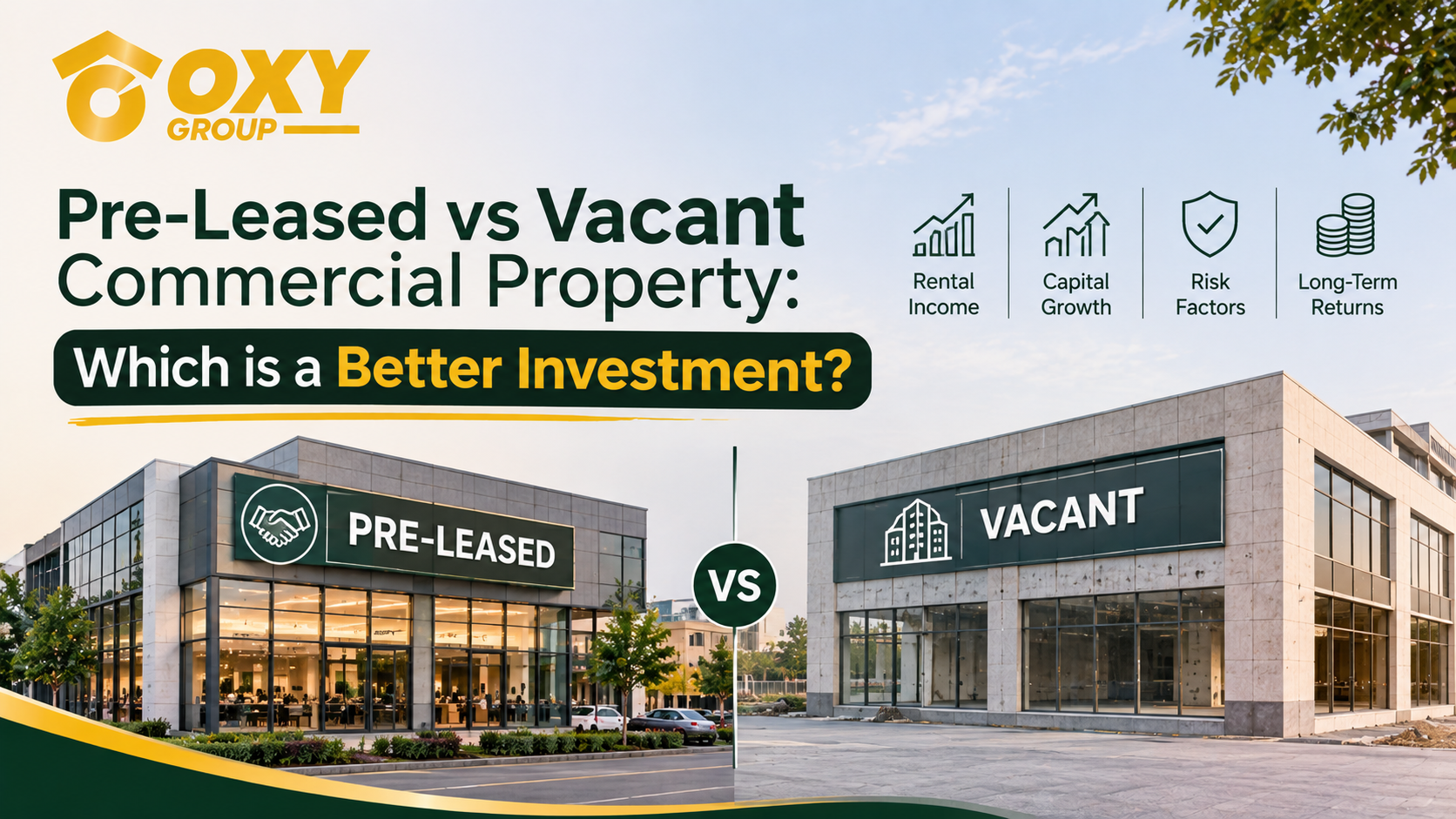
Selecting the right commercial property is more than just finding a good location or a good price. Investors should also consider when and how they plan to profit from their investment. One of the most common questions buyers ask is whether to purchase a pre-leased commercial property or a vacant one.
Each of the two choices has its own advantages. A pre-leased property gives you immediate rental income, while a vacant property gives investors more flexibility to find tenants and negotiate lease terms. The better choice depends on your investment goals, budget, risk tolerance and long-term plans.
Let’s take a look at the difference between these two options and which one may make more sense for your investment.
What Is a Pre-Leased Commercial Property?
A pre-let commercial property is one that is bought with a tenant already renting it under a lease agreement. The tenant could be a retail brand, an office, a restaurant, a bank or some other business.
The investor purchases the property and the existing lease and collects rent in accordance with the terms of the lease.
For instance, if you purchase a commercial shop that is already leased to a retail brand for ₹ 50,000 a month, you can begin earning rental income after the ownership transfer and other formalities are completed.
This makes pre-leased properties attractive to investors looking for a somewhat predictable income without having to find tenants immediately.
What Is a Vacant Commercial Property?
A vacant commercial property is a space that does not currently have a tenant. It could be a newly developed shop, office space, retail unit, or commercial floor waiting to be occupied.
When an investor purchases a vacant property, they have the freedom to identify suitable tenants, negotiate rental terms, and decide how the space should be leased.
However, rental income does not begin until a tenant is found and the lease agreement becomes effective.
Vacant properties are often preferred by investors who want flexibility and are comfortable managing the leasing process.
Pre-Leased vs Vacant Commercial Property: Key Differences
| Factor | Pre-Leased Property | Vacant Property |
| Rental income | Rent starts immediately because an active lease is already in place. | No rental income until you secure and onboard a tenant. |
| Initial risk | Lower immediate vacancy risk, though tenant default or non-renewal remains possible. | Higher upfront vacancy risk; the property may stay empty for months depending on demand and pricing. |
| Purchase price | Often priced at a premium because buyers are paying for assured income and an existing lease. | May offer a lower entry price, but you must account for vacancy, fit-out, and leasing costs. |
| Tenant selection | You inherit the current tenant, so their credit quality and business stability matter greatly. | You choose the tenant, lease structure, rent level, and tenant-mix strategy. |
| Income planning | It’s easier to forecast if the lease, rent escalation, lock-in, and payment history are verified. | Income depends on future leasing, so cash-flow projections are less certain initially. |
| Management | Usually less immediate leasing work, but you still need to monitor lease compliance, renewals, and tenant risk. | Requires active marketing, tenant search, negotiations, documentation, and fit-out coordination. |
Benefits of Investing in a Pre-Leased Commercial Property
1. Rental Income From Day One
A big plus for a pre-leased property is that there’s already a tenant in it. Investors can earn rental income without waiting for the property to be occupied.
This can make financial planning easier, especially for buyers looking for their investment to generate regular income.
2. More transparency on income
The existing lease will contain monthly rent, lease term, security deposit, escalation clauses and other rental conditions.
This information allows investors to calculate the possible return on their investment and gives them a sense of how the property might behave over the life of the lease.
3. Reduced Vacancy Concerns
Finding the right tenant can take time, especially in locations where commercial demand is still developing.
With a pre-leased property, the investor avoids the immediate challenge of attracting a tenant, although future vacancy remains possible when the existing lease expires.
4. Suitable for Passive Investment
Investors who do not want to actively manage the leasing process may find pre-leased properties more convenient.
However, the lease agreement, tenant financial strength, property maintenance responsibilities, and rental terms should always be checked before making a purchase.
Benefits of Investing in a Vacant Commercial Property
1. More Flexibility in Leasing
A vacant commercial property allows investors to choose their own tenant. They can target businesses that suit the location, negotiate rental terms and conditions and structure the lease according to their investment objectives.
2. Potential for Higher Rental Income
If the property is purchased at a competitive price and leased successfully at a strong market rental, investors may achieve attractive returns. This is particularly relevant in locations where commercial demand is growing and rental values are improving.
3. Opportunity to Create Value
Vacant properties can offer opportunities to improve their leasing potential through better interiors, signage, accessibility, or suitable space planning.
In some cases, an investor may be able to attract a stronger tenant by improving the property’s overall appeal.
Which Investment Is Better for Long-Term Returns?
The answer to that is not easy, as both alternatives work differently.
A pre-leased property could be a good fit for investors seeking immediate rental income and relatively predictable cash flow. An empty property could be a good play for an investor willing to take on the burden of leasing in exchange for more flexibility and upside potential.
For a pre-leased property, check:
- Tenant reputation and financial stability.
- Remaining lease duration.
- Rental escalation clauses.
- Security deposit and termination conditions.
- Market rental value compared with the existing rent.
For a vacant property, check:
- Demand for commercial spaces in the location.
- Expected rental value based on comparable properties.
- Time required to find a suitable tenant.
- Leasing costs and maintenance expenses.
- Competition from nearby commercial developments.
Investors should also calculate net rental yield after considering maintenance charges, property taxes, vacancy periods, and other applicable expenses.
Final Thoughts
Pre-leased and vacant commercial properties both offer different investment opportunities. A pre-leased property can provide rental income and greater income visibility, while a vacant property offers flexibility and the opportunity to build a better leasing arrangement.
The right investment depends on what matters more to you: earning rental income from an existing tenant or having the freedom to lease the property on your own terms.
Before making a decision, evaluate the property’s location, rental potential, tenant demand, purchase price, and long-term investment. A well-researched investment can make a difference regardless of whether the property is pre-leased or vacant.
Explore OXY Infra.
Oxy Hi Street offers commercial property options for businesses and investors looking to explore opportunities in Ghaziabad.
Apart from rental income, investors should also consider the property’s long-term resale potential before making a decision. Our previous blog, Commercial Property Resale Value: What Affects Your Exit Price?, explains the key factors that influence resale value and how they can impact your investment’s exit strategy.
To know more about Oxy Hi Street:
👉 Download the brochure to explore project details and available options, and connect with the Oxy Infra team for more information.
Frequently Asked Questions (FAQs)
1. Is a pre-leased commercial property a good investment?
A pre-leased commercial property can be a good investment for buyers whose main focus is rental income from an existing tenant
2. Is a vacant commercial property cheaper than a pre-leased property?
Vacant commercial properties may have a lower purchase price in some cases. However, pricing depends on location, property condition, rental potential, and market demand.
3. Which commercial property offers better rental returns?
Both options can offer attractive rental returns. Pre-leased properties provide an existing rental arrangement, while vacant properties may offer opportunities to negotiate better rentals.
4. What should investors check before buying a pre-leased property?
Investors should review the lease agreement, tenant credibility, rental escalation clauses, lease duration, security deposit, and legal ownership documents.