
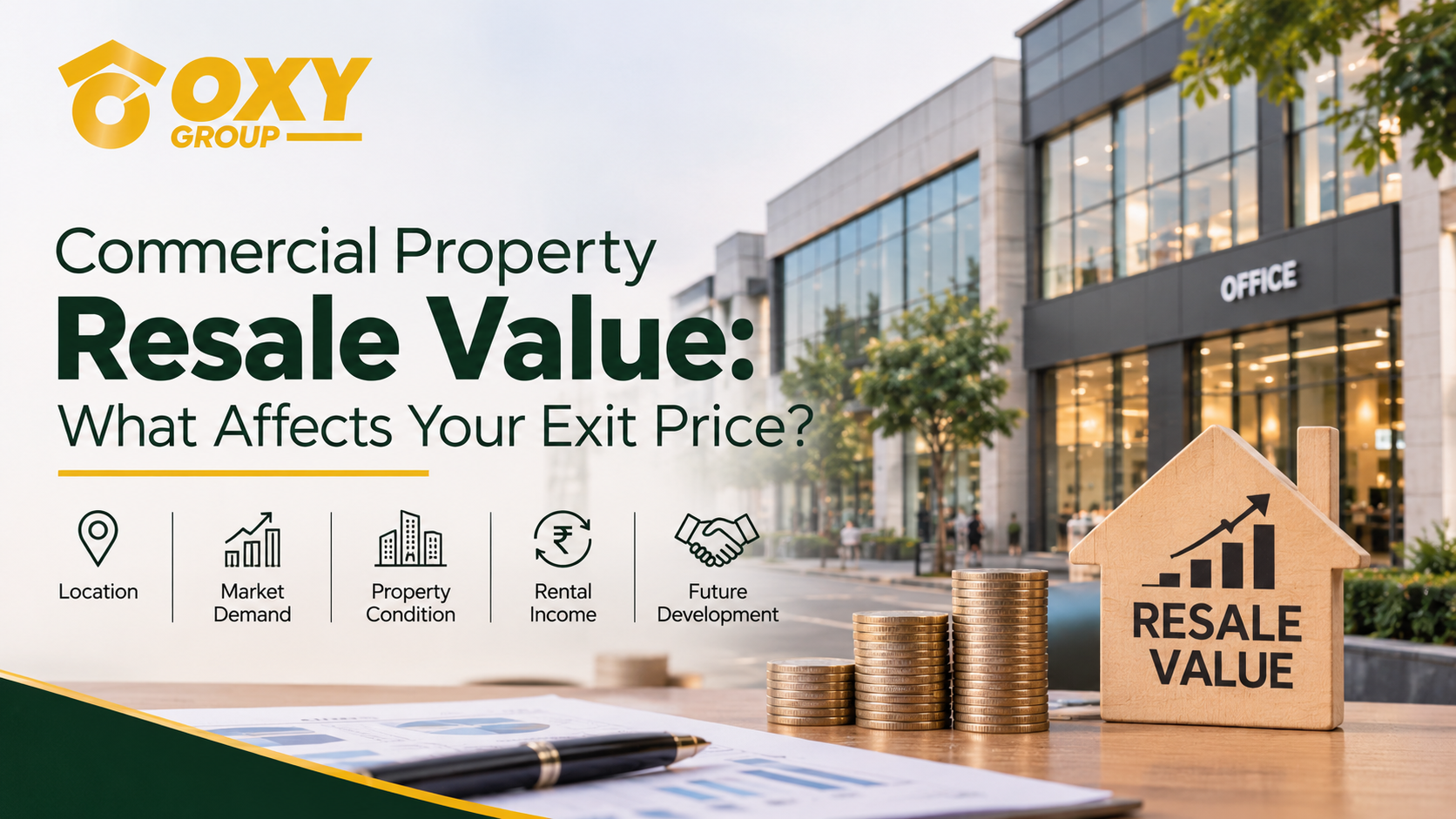
Selling a commercial property is more than just finding an investor or buyer. It’s about knowing what your property offers that is attractive in the market and what someone will actually pay for that. If you are a retail shop owner or have an office space, showroom or commercial unit, the resale value is based on more than the initial buying price.
Some commercial properties may appreciate greatly over time, while others may have difficulty finding buyers even in a growing real estate market. The price you can expect when you sell is dependent on location, rental income, tenant quality, property condition and market demand.
If you are planning to invest in commercial real estate in Ghaziabad or anywhere in Delhi NCR, understanding these factors can help you make better investment decisions right from the beginning.
1. Location and Connectivity
Location still remains one of the biggest influences on the resale value of commercial property. In general, a property situated in a well-developed commercial area with good connectivity is generally more attractive to buyers or investors.
For businesses and investors, the property is more attractive if easy access to major roads, highways, metro stations, and public transport can improve the property’s appeal to businesses and investors. Areas with nearby residential communities, offices, and retail activity may also benefit from consistent customer movement.
For example, a commercial shop located on a busy high street may attract more interest than a similar shop in an isolated commercial complex with limited accessibility.
As infrastructure develops and business activity increases, the demand for commercial spaces in the area may also improve.
2. Rental Income and Existing Tenants
For buyers, commercial property is often purchased with the expectation of earning rental income. This makes the property’s current rental performance an important consideration during resale.
A property that generates regular rental income can be more attractive than a vacant one because the investor may start earning from the investment immediately.
However, the rental income alone is not enough. Buyers also consider:
- Monthly rental income
- Lease duration and renewal terms
- Tenant reliability
- Rental escalation clauses
- Vacancy history
- Maintenance responsibilities
A property with a reliable tenant and a well-structured lease can provide greater confidence to potential buyers.
3. Tenant Quality and Business Stability
The value of commercial property on resale can be affected by the nature of its tenant.
A property leased to a well-established business with a history of stable operation might appear less risky to investors. Such tenants can provide more predictable rental income and reduce the chances of frequent vacancies.
On the other hand, potential buyers may want to look closer at a property with a tenant that is unreliable, frequent delays in rental payments or lease terms that are unclear.
Tenant quality becomes particularly important in the sale of leased commercial properties, as buyers often evaluate both the property and the income it generates.
4. Property Condition and Maintenance
The physical condition of a commercial property can directly affect its attractiveness during resale; it plays an important role. Investors want good maintenance conditions.
Buyers usually prefer properties that are properly maintained and ready for us and move in. Poor maintenance, damaged interiors, plumbing issues, electrical problems, or neglected common areas can reduce buyer interest, and they may think twice after the bad condition and maintenance.
Before putting a property on the market, owners should consider:
- Repairing visible damage
- Maintaining electrical and plumbing systems
- Improving the entrance and overall appearance
- Ensuring proper lighting and ventilation
- Keeping common areas clean and functional
Even small improvements can make a property easier to show and help to make a better impression, and you can make it attractive when people come to view it.
5. Market Demand and Business Activity
Commercial property values are closely connected to business activity in the surrounding area and locality.
Where new companies, offices, retailers and service providers are attracted, the demand for commercial property may increase. This can open up opportunities for property owners looking to sell.
But the demand for different types of commercial property is not always evenly distributed.
For instance, an area may have a high demand for retail shops but a low demand for office space. A commercial complex may also not perform the same way as high street retail properties in the same locality.
It is important to understand the demand for a given type of property before estimating its resale price.
6. Rental Yield and Investment Returns
Rental yield is another important factor that investors consider when evaluating commercial property. It helps buyers understand how much rental income a property generates compared with its purchase price.
A property offering a reasonable rental yield may attract investors who are looking for regular income along with long-term appreciation.
For example, if a commercial property generates ₹6 lakh annually in rent and its current market value is ₹75 lakh, its gross rental yield would be 8%.
However, buyers may also consider maintenance expenses, vacancies, property taxes, and other costs before evaluating the actual return.
Properties with competitive rental yields and reasonable operating expenses may have better resale appeal among income-focused investors.
7. Infrastructure Development Around the Property
Infrastructure development can influence commercial property demand over time.
New roads and metro connectivity, improved public transport and better access to important business areas make a location more convenient for customers, employees and business owners; they invest more in convenient places.
Infrastructure upgradations in developing parts of Ghaziabad and Delhi NCR can enhance commercial activity and lead to higher interest in the properties in the vicinity.
However, infrastructure development does not automatically guarantee appreciation. The actual impact depends on whether the improvement creates meaningful accessibility, business activity, and demand for commercial space.
8. Legal Documentation and Property Ownership
Buyers generally want to verify that the property has proper ownership records and the necessary approvals. Documentation issues can delay transactions or discourage potential buyers.
Important documents may include:
- Sale deed or ownership documents
- Applicable occupancy or completion certificates
- Approved building plans, where applicable
- Lease agreements for rented properties
- Property tax payment records
- Relevant approvals and compliance documents
Keeping documents organised and updated can make the resale process smoother and help buyers complete their due diligence with greater confidence.
9. Commercial Project Reputation and Surroundings
The reputation of a commercial project can also influence resale value.
A well-maintained project with active businesses, proper security, parking facilities, and organised management may attract greater buyer interest.
In contrast, a commercial property located in a poorly maintained complex with low occupancy or limited business activity may face challenges during resale. Buyers often evaluate the overall commercial environment rather than looking at the individual unit alone.
This is especially relevant for properties located inside commercial complexes, malls, and office developments.
10. Timing Your Commercial Property Sale
The timing of a sale can influence the price a property owner receives.
Selling during a period of strong demand may provide better opportunities than entering the market when buyers are cautious or financing conditions are restrictive.
Property owners should consider:
- Current market demand
- Comparable property prices
- Rental trends in the locality
- New commercial developments
- Buyer interest in the property category
- Overall economic and business conditions
It is also important to avoid relying only on the original purchase price or expected future appreciation when deciding the selling price.
A realistic valuation based on current market conditions can help attract serious buyers.
How Can You Improve Your Commercial Property Resale Value?
Although some factors are beyond the owner’s control, a few practical steps can help improve the property’s resale appeal.
- Maintain the property regularly and address repair issues.
- Keep ownership and legal documents organised.
- Maintain a reliable tenant relationship wherever possible.
- Review rental agreements and ensure clarity in lease terms.
- Understand the current rental and resale market in the locality.
- Avoid setting unrealistic asking prices.
- Highlight the property’s connectivity, accessibility, and commercial advantages.
A property that is well-maintained, properly documented, and supported by realistic rental expectations may be easier to market to potential buyers.
Final Thoughts
Commercial property resale value depends on a combination of location, rental performance, tenant quality, property condition, infrastructure, and market demand. While appreciation is an important part of commercial real estate investment, the ability to sell a property at a reasonable price should also be considered before making a purchase.
Investors who evaluate resale potential from the beginning can make more informed decisions about where to invest, what type of property to choose, and how to manage their investment over time.
For anyone considering commercial property investment in Ghaziabad or Delhi NCR, understanding these factors can help with long-term property planning.
Explore OXY Infra.
Oxy Hi Street offers commercial property options for businesses and investors looking to explore opportunities in Ghaziabad.
To know more about Oxy Hi Street:
👉 Download the brochure to explore project details and available options, and connect with the Oxy Infra team for more information.
Frequently Asked Questions (FAQs)
1. What decides the resale value of commercial property?
Commercial property resale value depends on location, connectivity, rental income, tenant quality, property condition, market demand, legal documentation, and infrastructure development around the property.
2. Does rental income increase commercial property resale value?
Yes, consistent rental income can improve a property’s attractiveness to investors.
3. Is a leased commercial property easier to sell?
A leased property with a reliable tenant and a clear rental agreement may attract income-focused investors.
4. Does metro connectivity affect commercial property resale prices?
Metro connectivity can improve accessibility and support commercial activity in surrounding areas. Its impact on resale prices depends on local demand, business growth, and the property’s proximity.
5. When is the right time to sell commercial property?
The right time depends on market demand, rental performance, property appreciation, and your investment objectives.