
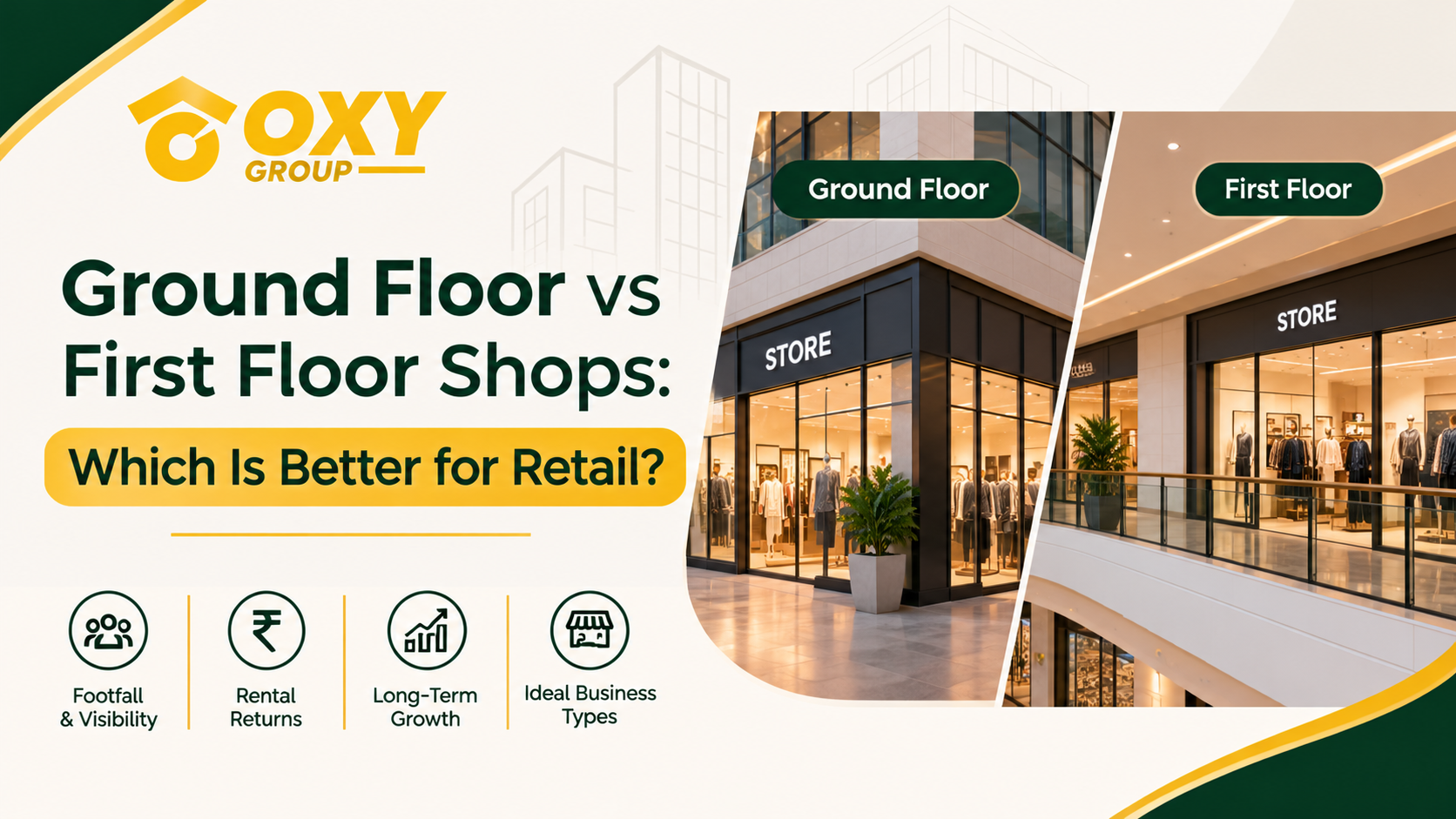
Choosing the right shop location is one of the most important decisions for any retail business. Even if two shops are in the same commercial building, their location on different floors can affect customer visits, sales, and rental potential.
A ground-floor shop may attract more walk-in customers, while a first-floor shop might offer more space at a comparatively affordable price. So, if you are planning to buy or rent a retail shop, which option should you choose?
The answer depends on your business type, budget, customer behaviour, and the location of the property. Let’s compare both options to understand which one may work better for you.
1. Ground Floor Shops: Better Visibility and Walk-In Customers
Ground-floor shops are usually the first choice for businesses that depend on regular customer visits. Since they are easily visible and accessible from the entrance, customers can enter without climbing stairs or using a lift.
This convenience can make a difference, especially in busy commercial markets and shopping areas.
Benefits of ground-floor shops:
- Better visibility: Customers can notice the shop more easily while walking or driving past.
- Easy accessibility: People can enter directly without taking stairs or lifts.
- Higher walk-in potential: These shops may attract more spontaneous visitors in busy locations.
- Suitable for many retail businesses: Grocery stores, clothing shops, pharmacies, salons, and convenience stores can benefit from easy access.
However, ground-floor shops often come with a higher purchase price or rental cost, particularly in popular commercial locations. Before investing, check whether the expected sales or rental income justifies the additional expense.
2. First Floor Shops: A More Budget-Friendly Option?
Also, shops on the first floor can be a good alternative, but their success depends on visibility, access and the type of business located there.
A shop on the first floor may not get many customers if it is not easily visible from the main road or if customers are not aware of the shop. But a well-designed commercial building with lifts, escalators, proper signage and regular footfall can make first-floor shops attractive.
Benefits of first-floor shops:
- Potentially lower investment: First-floor units may cost less than comparable ground-floor shops, depending on the project and location.
- Suitable for destination-based businesses: Customers who visit a business for a specific service may be willing to go upstairs.
- Useful for service-based retail: Boutiques, coaching centres, studios, salons, and speciality stores may work well on the first floor.
- More affordable space options: Buyers may find a suitable shop size within their budget.
The main challenge is attracting customers who are not already familiar with the business. Good signage, easy access, and a strong marketing strategy can help overcome this limitation.
3. Ground Floor vs First Floor Shops: Quick Comparison
| Factor | Ground Floor Shop | First Floor Shop |
| Visibility | Usually higher | Depends on signage and location. |
| Accessibility | Direct and convenient | Requires stairs, a lift, or an escalator |
| Walk-in customers | Potentially higher | Maybe lower without strong footfall. |
| Investment cost | Often higher | Maybe comparatively lower |
| Best suited for | Grocery stores, retail shops, pharmacies | Boutiques, studios, coaching centres, speciality stores |
| Rental potential | Depends on location and demand. | Depends on accessibility and tenant demand. |
Remember: These are general trends, not fixed rules. A first-floor shop in a popular shopping complex may perform better than a ground-floor shop in a poorly located building.
4. Which Floor Is Better for Your Business?
Before making a decision, think about how customers will find and visit your shop.
If your business depends on spontaneous purchases, such as a grocery store, bakery, or convenience shop, a ground-floor location may offer an advantage.
On the other hand, if customers visit you for a specific product or service, a first-floor shop can also work well. For example, customers may willingly go upstairs to visit a boutique, coaching centre, or specialised studio if they know the business and can reach it easily.
If you are buying a shop for rental income, consider the type of tenants likely to be interested in that location. Compare the purchase price, expected rent, maintenance charges, vacancy risk, and other expenses before deciding.
5. Important Things to Check Before Investing
Regardless of the floor you choose, do not make your decision based on price alone. Check these factors before purchasing a commercial shop:
- Location: Is the property in a busy market or a developing commercial area?
- Footfall: Do enough potential customers visit the building?
- Accessibility: Are lifts, escalators, stairs, and entrances convenient?
- Visibility: Can customers easily identify the shop?
- Total cost: Consider the purchase price, maintenance, and additional charges.
- Rental demand: Is there demand for shops on that particular floor?
For investors exploring commercial property in Ghaziabad, comparing different commercial projects and their surrounding markets can help you understand which location and floor may suit your investment goals.
Explore OXY Infra.
If you are looking for a commercial property with potential for rental income, location and accessibility should be among your key considerations. Oxy Hi Street offers commercial property options for businesses and investors looking to explore opportunities in Ghaziabad.
To know more about Oxy Hi Street:
👉 Download the brochure to explore project details and available options, and connect with the Oxy Infra team for more information.
Final Thoughts
Both ground-floor and first-floor shops can be good retail investments, but they serve different business needs.
Ground-floor shops generally have an advantage in visibility and easy access, making them suitable for businesses that depend on walk-in customers. First-floor shops may offer a more affordable entry point and can work well for businesses that attract customers through appointments, recommendations, or targeted marketing.
Before investing, compare the property’s location, total cost, accessibility, and rental demand rather than choosing a floor simply because it is cheaper.
The best shop is not always the one on the ground floor. It is the one that matches your business requirements and investment budget.
Frequently Asked Questions (FAQs)
1. Are ground-floor shops better for retail businesses?
They can be, especially for businesses that depend on visibility and walk-in customers. However, the location and type of business also matter.
2. Are first-floor shops cheaper than ground-floor shops?
First-floor shops may have lower prices or rents, but this varies by project, location, and customer demand.
3. Can a first-floor shop generate good rental income?
Yes. Rental potential depends on accessibility, footfall, location, and demand from suitable tenants.
4. Which floor is better for investment?
Neither floor is automatically better. Compare the total investment, expected rental income, expenses, and demand before deciding.
5. Are first-floor shops suitable for all types of businesses?
First floor shops can work well for salons, offices, boutiques and appointment-based businesses that do not depend heavily on walk-in customers.
6. What should investors check before buying a retail shop?
Investors should compare location, visibility, footfall, rental demand, maintenance costs and expected returns before choosing a retail shop.